Tesla Model 3

After years of obsessing and strategizing, I finally, finally, took the plunge and bought a Tesla Model 3 sedan. I’ve been studying this company since 2012 when a pal at work told me about the new Model S sedan. I read the press and followed the developing product lines. I bought stock. When the time came that I needed a new vehicle, the voice of financial reason in my mind just would not allow me go all in on an expensive new Model S. “Vehicles are terrible investments,” the voice said. “They depreciate immediately upon driving off the lot.” “The same dollar amount yielding compound interest is a far more sensible strategy.” Yeah, yeah, yeah. But we can’t be 100% sensible ALL the time, now, can we? Fortunately for me, the much less expensive Model 3 became available sooner than I anticipated. Similar in price to other vehicles I have owned, free of typical fuel-associated costs, and available in all-wheel drive, this sedan provides enough practicality to be the perfect option for me. Friends and family not familiar with Tesla or their products have asked me many questions about how the car works. This post is meant to address these basic curiosities.

What is Tesla?

Tesla is a company that makes electric vehicles and solar energy-related products, and is well known for producing stylish, highly functional all-electric cars. Factories are located in the United States, specifically California and Nevada, and now also in China and Germany where vehicles are produced for sale on the respective continents. Tesla vehicles are not only outstanding electric vehicles, but are Award winning across the board for safety, design, and performance as compared to all other same-class luxury vehicles. Lithium ion batteries, Solar roofs (solar shingles), Solar panels, and an associated home energy storage system (Powerwall) are manufactured by Tesla as well.

Is the car fueled by gasoline AND electricity?

No. The car is powered entirely by lithium ion battery. There is no gasoline engine involved. There is no oil to change, no gas tank, no mechanism of combustion whatsoever. On a full battery charge, my Model 3 can travel nearly 310 miles.

What do you do if the battery dies?

Well, what do you do if your car runs out of gas? The key is to not let that happen, and it works the same way with a Tesla. Most people use their car daily for relatively short trips to work or school, to run errands, etc. They visit a fuel station occasionally when their tanks get “low”. The same pattern, i.e. wait for the battery level to diminish and then charge in one setting, can be used to manage a Tesla. Electric vehicles have an additional, uniquely convenient option, however, which is to charge the battery nightly, the way many of us manage our cell phones. With this practice, each day starts with plenty of charge. Longer trips will require stopping to recharge (ideally at a Supercharger because the service is blazing fast,) much like a gasoline car requires stopping to fill the gas tank.

At a SuperWhat?

SuperCHARGER. Supercharger facilities are located around the country as part of a strategically developed infrastructure. This collection of individual charging stations will accommodate several vehicles at once, and will charge a battery with astonishing speed. They are often found in metro areas, and are spaced such that Cross country travel is possible powered entirely by supercharger.

Does Tesla make more than one type of car?

Yes! First came the Roadster. Next was the Model S, a sedan, then the Model X, an SUV. All of these options were very expensive. The Model 3 is intended to improve upon the cost factor, and will eventually become available for around $35,000. Additionally, the Model Y, CyberTruck, and Semi tractor are in the works. Imagine the positive impact on the environment if semi trucks become powered by clean electric energy!

Where is the closest Tesla dealership?

There are no “dealerships”. Tesla has Service Centers, and showrooms where people can view display vehicles, experience a test drive, and ask questions. When a driver is ready to purchase a Tesla, vehicle speculations are chosen and the order is placed online. Some used inventory is available, also online.

Can a Tesla drive itself?

All Teslas are equipped with technology to facilitate Full Self Driving (FSD) capacity, and currently Enhanced Autopilot is available, activated for a fee. Eventually, FSD will be able to navigate from one geographical point to any other without human interaction, and will do so more safely than if operated by a human driver. While accidents involving Autopilot have been featured in the media, the fact remains that drivers utilizing autopilot are Statistically much safer than human drivers. It is stressed that drivers are to remain alert and in control at all times, even when Autopilot is in use.

Why have I never heard of this company?

Tesla does not actively market their products or utilize hired spokespersons. Enthusiasm has been generated simply by word of mouth from delighted customers. Thus far, demand has exceeded production, although huge strides have been made over the last year in factory capacity. As time goes by, you will definitely hear much more about Tesla.

Social Distancing and COVID-19

#SocialDistancing

Are you skeptical about “social distancing,” wondering exactly what this means and why it is so important?

First, let’s explain what exactly COVID-19 means. This term refers to the disease, or the typical constellation of symptoms displayed by people who are infected with a virus now identified as SARS-CoV-2. This specific virus has never been seen before, and that is why a vaccine does not already exist, and creating one is not a speedy process. At worst, patients with COVID-19 develop terrible pneumonia that prevents the lungs from supplying the body with oxygen. Many patients, unfortunately, begin to improve from the pneumonia only to develop devastating heart failure. COVID-19 is most deadly in people over 60, smokers, and those with other serious health problems.

So, what exactly is “social distancing”? It is basically the concept of keeping enough distance between people in social situations to prevent the spread of disease via droplets in cough, sneeze, etc.

Social distancing is crucial for slowing the spread of COVID-19 by separating potentially contagious people from healthy people. Adopting these measures NOW will make or break HOW, not IF, the epidemic hits our population and our medical system.

Some individuals who contract the virus will develop no symptoms. They won’t seem sick.

Most people with COVID-19 will develop mild to moderate cough, fever, body aches, and sometimes GI symptoms.

The majority of these folks will never be tested because they won’t meet current criteria in the United States for testing. But they will be very able to transmit the disease to other individuals.

Even if a relatively small percentage of persons with COVID-19-related viral illness require hospitalization and advanced medical care, IF THEY ALL BECOME SEVERELY ILL AT ONCE IT WILL BE DEVASTATING. There are only so many hospital beds. There are limited numbers of ventilators. There is a fixed number of physicians and nurses and respiratory therapists and support workers to facilitate necessary care, assuming they all remain well, which they will not.

https://healthblog.uofmhealth.org/wellness-prevention/flattening-curve-for-covid-19-what-does-it-mean-and-how-can-you-help

If we (the population) slow the disease’s spread, we (the medical community) will be able to keep up. If we fail to slow the spread of the disease, we will not be able to tolerate the stress to the medical system. People will die.

You may think, “I’m young, I’m healthy, this ‘social distancing’ nonsense is bad for the economy. It’s like the flu. It’s overblown by the media. It won’t affect me.” Ok. Well, you may be right, you may be at very low risk of suffering personal harm from COVID-19. Let’s assume you don’t care much about infecting higher risk people, because it still leaves you directly unaffected. But, if ALL the hospital beds are overrun with critically ill patients, and you or a loved one has a stroke, or a heart attack, or a car wreck, or a bad case of influenza, or any serious common malady, and need critical care that is completely unavailable, then it suddenly becomes a big personal problem for you. Or maybe you’re in a small community where the odds of infection are lower, but your local hospital can’t get critical, basic, everyday supplies necessary for routine care of your chronically ill self or relative? It affects you. Then what?

Worse, if the system gets severely overrun, you can expect the triage system utilized for managing critically ill patients to change, as is happening NOW in northern Italy. Instead of care going to the sickest patients as it does under normal circumstances, care instead goes to the patients most likely to survive. Put simply, when there aren’t enough medical resources to keep everyone alive, people who could have been saved are going to die. Like in a war. Because under those circumstances, our society will be at war with SARS-CoV-19. This scenario is unthinkable, but it can be prevented.

https://www.theatlantic.com/ideas/archive/2020/03/who-gets-hospital-bed/607807/

How? First of all, admit there is a serious problem. Realize that when we were told days and weeks ago this issue was “locked down” or “not serious” or that the “system” is “totally prepared,” we were woefully misinformed. Understand that because most patients don’t get tested, the actual number of positive cases in our communities are probably vastly underestimated. Prepare for the fact that this will get worse before it gets better. Listen to the epidemiologists and scientists who spent a lifetime studying this stuff. Cooperate.

https://www.npr.org/sections/health-shots/2020/03/11/814460233/coronavirus-1-000-cases-now-in-u-s-and-it-s-going-to-get-worse-fauci-says

https://www.youtube.com/watch?v=E3URhJx0NSw&feature=share

https://peterattiamd.com/covid-19-update-03152020/

Please don’t panic. Please don’t hoard supplies. For the love of all that’s holy PLEASE wash your hands and please STAY HOME. Get rest, exercise, eat well, and do the best you can to keep yourself healthy. Need something in the community like groceries or carry-out food? Fine. Get what you need and go back home. Don’t go out and get infected and then be the reason other people get sick and die. Don’t travel to areas where the infection rate is high (Seattle, New York) and then bring the disease back home to your elderly community members. Work from home if you can. If you develop symptoms, call in to get advice from your doctor’s office. Don’t go to the ER unless your symptoms are severe, and even then, call first. Don’t “demand” a test because the kits are often administered only under specific circumstances as directed by the CDC and local health departments, or not available at all. Becoming angry and yelling at the medical professional trying to help you is not productive. (It is worth noting that countries where COVID-19 is well-controlled enjoyed widely available testing, administered those tests early, often, and at minimal inconvenience and cost to the patient, and that our current protocol is entirely backward. But we will save that discussion for a less urgent day)

Accept that everyone will be majorly inconvenienced. There are people delaying weddings and postponing funerals. Long-anticipated travel plans are being quashed. Lives are being disrupted. People will be profoundly disappointed, but we must do everything we can to slow this thing down. Please don’t give up hope, because it CAN be done. Finally, don’t let negativity drown out the good in the world. Look for it. It’s still there. Please go be part of it.

https://nba.nbcsports.com/2020/03/13/nba-players-teams-help-arena-workers/

https://apple.news/ADQAV3MDQQICrn13g-ltKhA

Lisa Rollison, DO, is a general surgeon in Missouri.


The Fixer-Upper

I had some extra time on my hands. The town I was working in, which is also my hometown, was in need of quality rental homes. I decided to try my hand at a remodel. “It will be a learning experience,” I thought, “won’t take more than a couple of months,” I said. Well, I was partially right…..

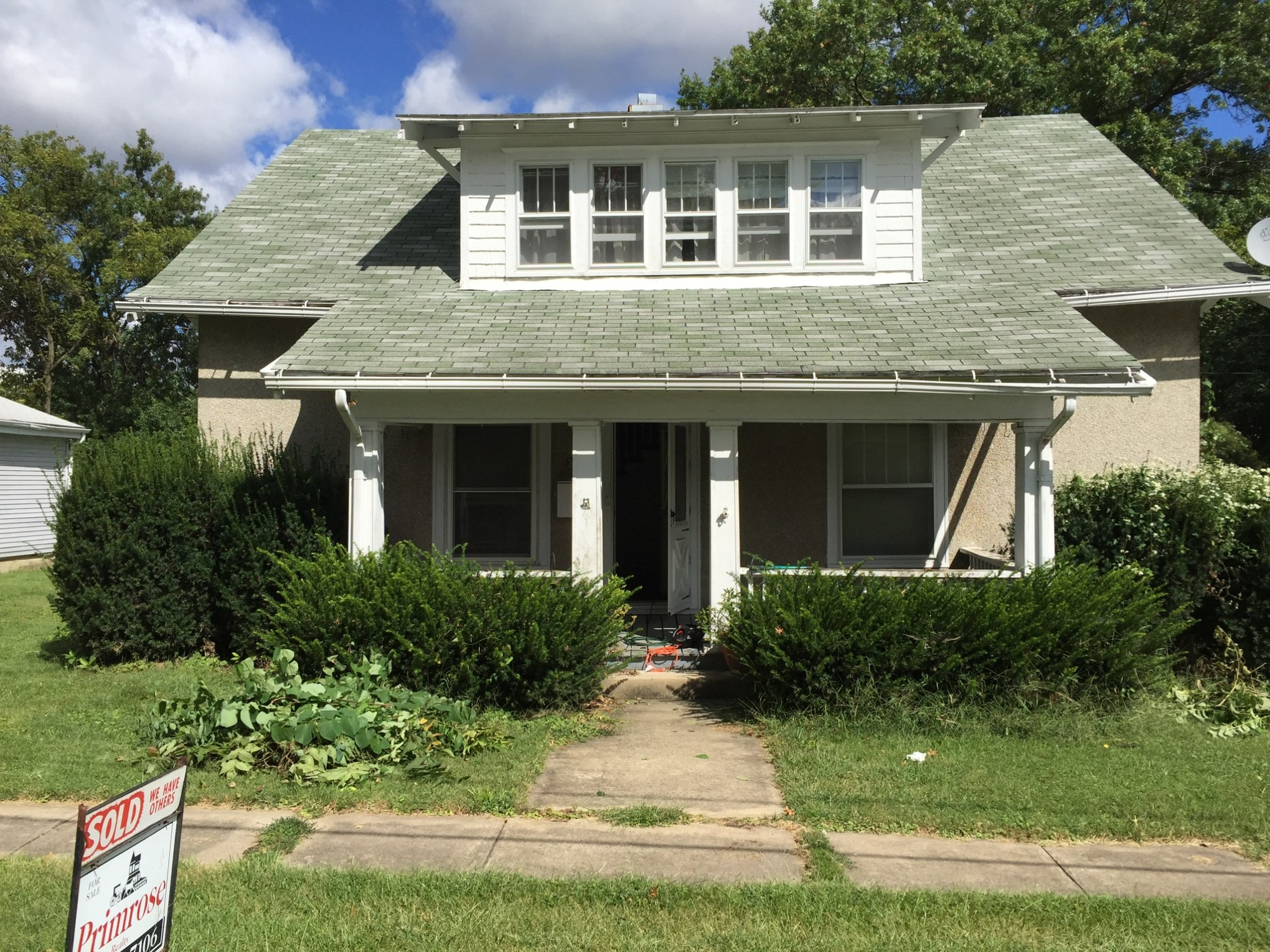
This lovely old home needed some TLC. I had it “examined” and was told it has a solid foundation and great “bones” . The price was right. We closed on the home and I got to work right away.

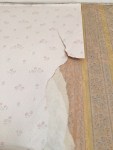
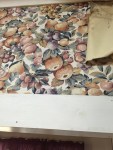
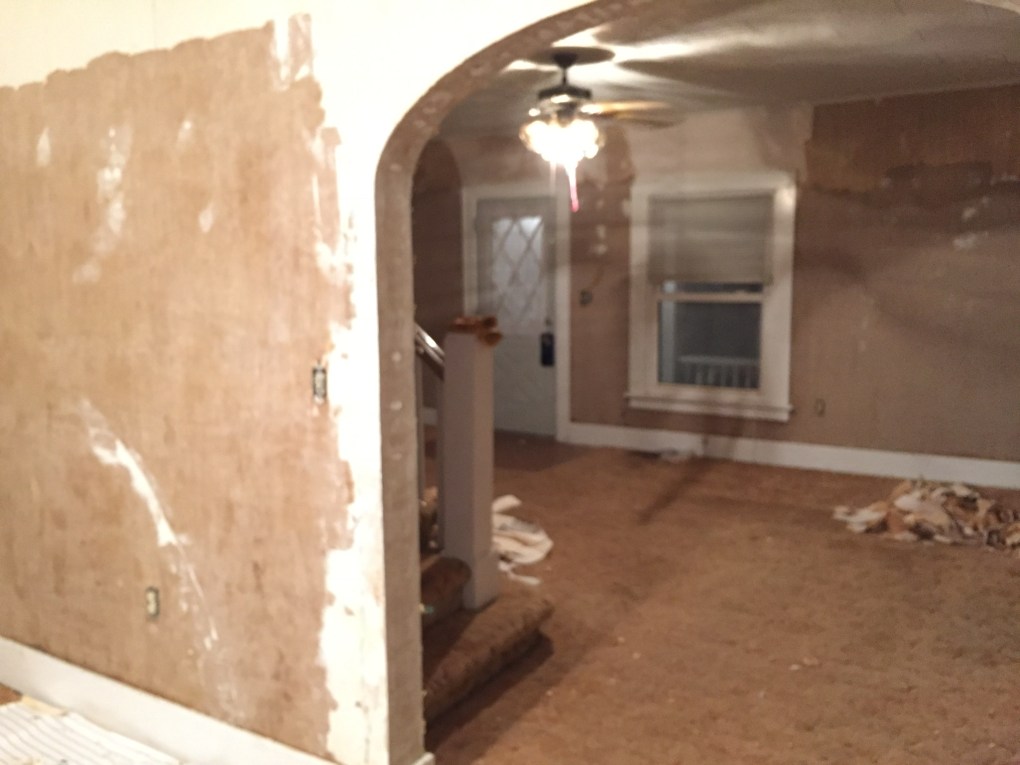
The first thing I did was clean up the outside. Then I moved inside and began taking down wallpaper. So many different types of wallpaper. It was in almost every room. It required a steamer and a lot of patience. During this process, I listened to many episodes of This American Life , StartUp , and The Tim Ferriss Show . It was tedious and it took forever.


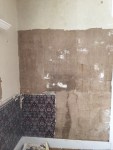
After all the wallpaper came down, the contractors got to work skimming the walls, making repairs, updating electric and plumbing. Next, I went to work pulling up carpet. I found old, but salvageable hard wood underneath. There were thousands of carpet tacks to pull up. I went through many hours of podcasts and audiobooks. One of my favorite books from that time was When Breath Becomes Air by Paul Kalanithi.


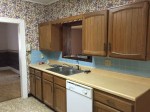
Next, the kitchen & bathroom were refinished, the hardwood floors redone, and the walls painted. I took down all doors down, removed and refinished all hardware, repainted the doors, and put it all back together. The original glass doorknobs were very pretty. I painted walls & trim, and scrubbed down everything else.


Eventually, nearly one year after the project began, the house was rented to a wonderful family who lives there to this day. As expected, it took more time, money, and effort than what was budgeted, but I learned a lot and I may do it again someday.♥